Using Base64 Encoding: When and How to Implement It
Base64 encoding turns binary data into text so it can travel safely through text-based systems—learn when to use it and how to implement it in PHP.
Base64 encoding turns binary data into text so it can travel safely through text-based systems—learn when to use it and how to implement it in PHP.
Explore five practical freeware tools that can strengthen PHP development workflows—from code editing to debugging and local testing.

Safe data handling in PHP isn\’t one trick\u2014it\u2019s a sequence of small, correct moves. Once you get the order right\u2014sanitize
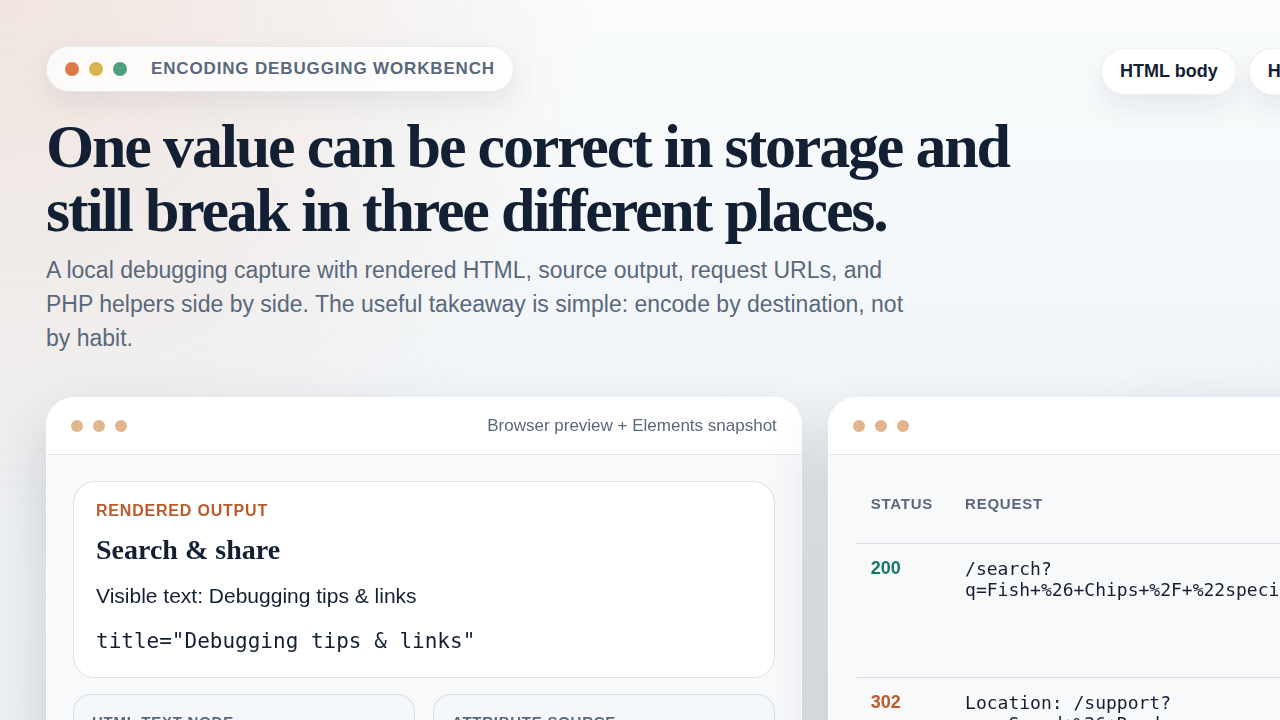
A practical guide to HTML encoding and how it helps prevent XSS when rendering untrusted PHP output.
A practical guide to URL encoding in PHP—what it protects, common pitfalls, and safe implementation patterns.
A practical workflow comparison for small teams deciding between manual spreadsheets and a purpose-built reporting page.

Who owns a domain? It’s a fair question—and Whois lookups are one of the first places researchers check. But modern
Good referrer reporting is about restraint: collect what helps you make decisions, and leave out the details that create unnecessary
A content-and-UX guide for presenting utility links so visitors can find what they need quickly.
A plain-language checklist to help editors and site owners encode links safely—so query strings, special characters, and copy/paste don’t turn into broken URLs.