Secure PHP File & Parameter Handling: Preventing Injection in URL, Headers, and Form Inputs
A practical PHP guide to validating request data, handling filenames and uploads safely, rejecting dangerous header input, and escaping output by context.
Learn how to create a reusable PHP toolkit for encoding, hashing, and encryption with clear boundaries, safe defaults, and practical tests.
Explore the differences between HTML entities, HTML encoding, and URL encoding in this hands-on debugging guide for developers. Learn how to troubleshoot common encoding issues in PHP output, forms, and redirects.
Learn what Whois can really tell you about a domain, which fields matter most, why results vary between tools, and how to present domain intelligence safely without overstating ownership or exposing sensitive details.
Practical guidance for PHP developers choosing between AES-256 and SERPENT, with key handling, IV management, payload design, rotation, and testing priorities.
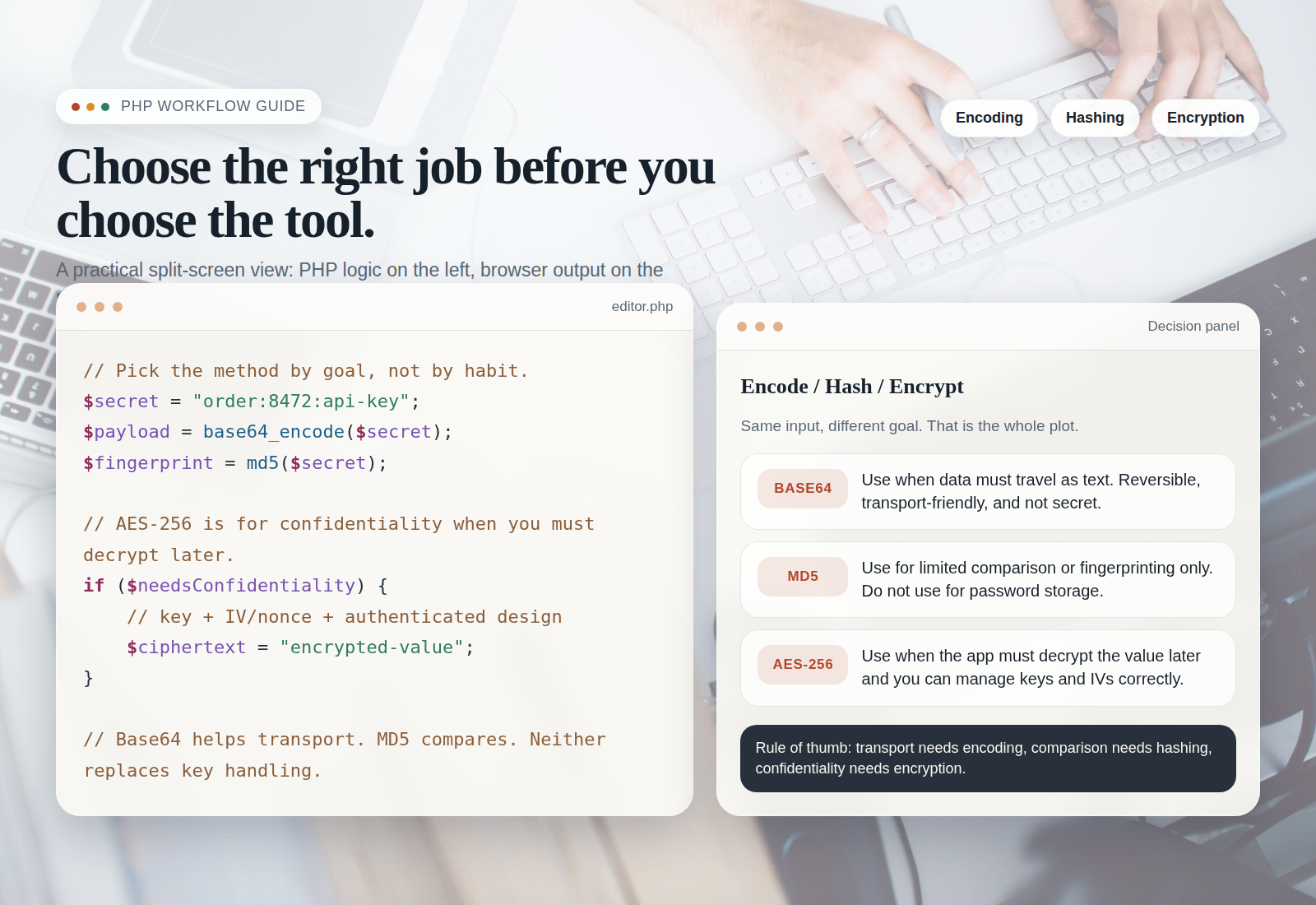
A practical guide to encoding, hashing, and encryption in PHP: when to use MD5, when Base64 is only for transport-safe text, and when AES-256 is the right choice for protecting web app data.
Learn the difference between URL encoding and HTML entity encoding, when to use each, and how to avoid common mistakes like double-encoding, wrong-layer encoding, and broken output.
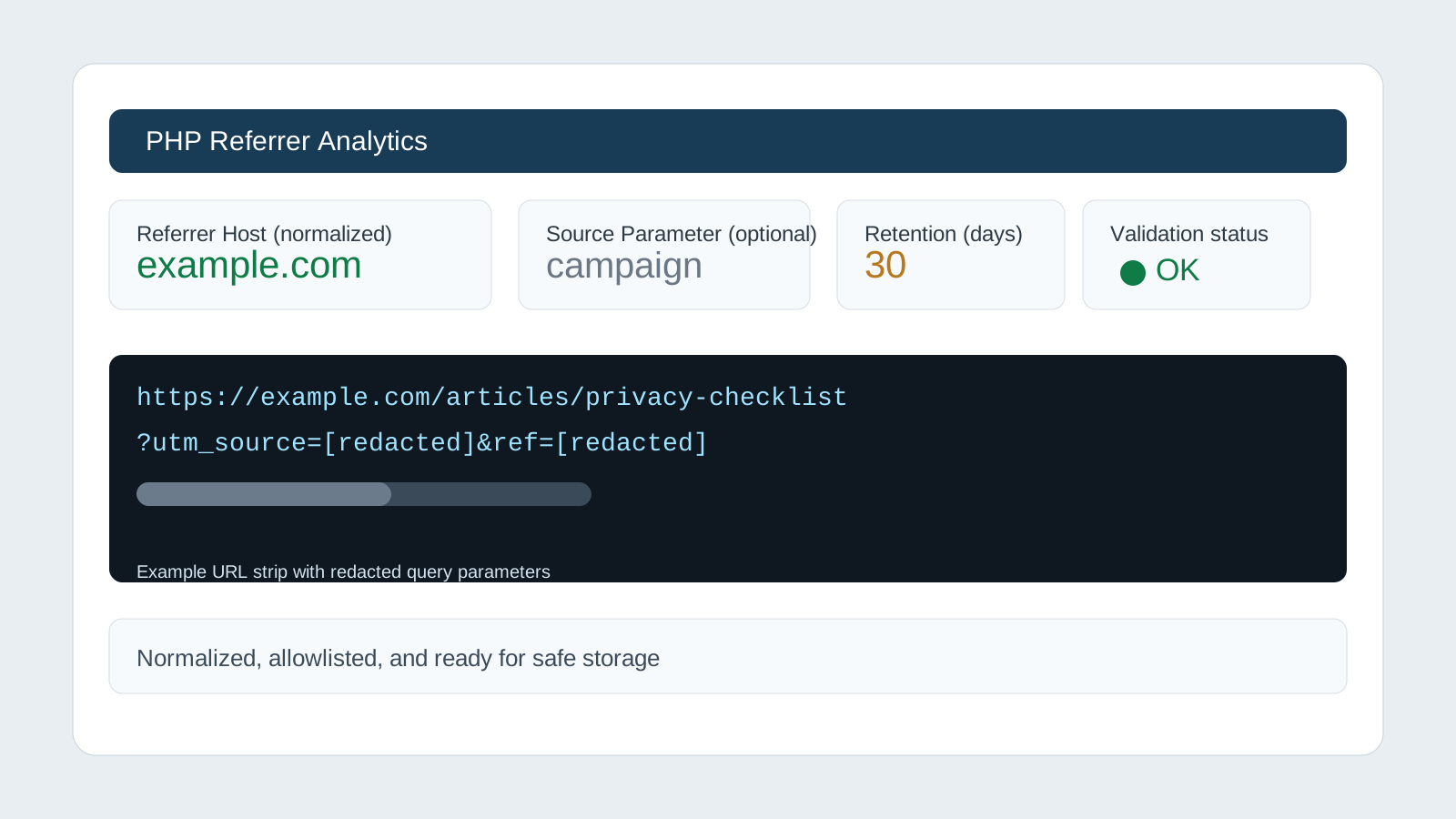
Learn what the HTTP Referer header is, what you can’t reliably track, and how to capture, normalize, validate, and report referrer data safely without bloated logs or misleading numbers.
A practical PHP checklist for safe input handling: when to URL-encode, when to escape HTML, how to avoid double-encoding, and how to render output safely in each context.